Showing posts with label Book Review. Show all posts

Saturday, March 27, 2010

Book Recommendation; After You Believe by N. T. Wright

The premise of what N.T. Wright sets out to do in After You Believe is best summed up in the subtitle, “Why Christian Character Matters”. This is a fair and honest question that deserves the 280 pages that Wright dedicates in exploring this question. In a world of propositional faith within western Christianity, (Problem? Sin! Solution? Jesus!), this question seems to beg us for an answer. One may be surprised by the direction that Wright takes this premise. You will not find a list of do’s and don’ts. Instead, as a seasoned archaeologist uses the finest tools and due diligence to uncover an ancient civilization, Wright too uncovers the New Testament world in relation to Christian character.

Wright argues that Christian character is not something that can be accomplished in rules and laws. Yet, Christian character also cannot be accomplished by spontaneity of the heart either. (You may find forms of this ongoing/polarized conversation in many churches today). What Wright does propose is an active aligning of ourselves to the unfolding story in God’s kingdom. As we do so, our character, or virtue, will be shaped by our hope for a resurrection. Wright points to faith, hope, and love along with the fruit of the Spirit, to give a frame work that will allow “virtue” to flourish.

What do we do after we believe? If you are like me the pat answers to this question have never sufficed. Some say we should wait for heaven and bring as many people with us. But is there more? Are we just here for good behavior and a shared morality? If these questions resonate with you, then After You Believe is an excellent starting point for a proper framing of purpose within the context of virtue.

-Dan Jones

*Disclosure of Material Connection: I received the product mentioned above for free by The Ooze Viral Bloggers in the hope that I would mention it on my blog. I am disclosing this in accordance with the Federal Trade Commission’s 16 CFR, Part 255: “Guides Concerning the Use of Endorsements and Testimonials in Advertising.”


Thursday, December 10, 2009

Win an Advanced Copy of Ron Martoia's New Book, Bible As Improv


Zondervan has offered to give away a free advanced copy of Ron Martoia's new book The Bible as Improv, Seeing and Living the Script in New Way on this very blog! This is well worth the read so I encourage you to enter to win.

If you haven't read my review of this book, please do by going here. Post any relevant reactions and thoughts along with your full name on this post, then email me you home address to danieljmjones@hotmail.com. I will select and announce a winner at random on December 18th at 1:00 pm, and Zondervan will send you the book, it is that simple! All entries must be received by Dec. 18th by 12:00 pm. Good Luck!

-Dan Jones

Monday, December 7, 2009

"The Bible as Improv", by Ron Martoia, An itch worth scratching


The nagging feeling of an itch, it just doesn't go away until you give into its urge. It demands our attention and response on a timely manner. But what if you are unable to locate this itch, let alone define it? You may be very aware that it is there, but what if you couldn't pin point it's exact location? Perhaps you can find it, but the scratching itself is not helping, but in fact, it is making it worse.

This is the best way I can describe the ways in which I engage the Bible. Hermeneutics (The way we apply the Bible) has always left me with a shallow feeling, an itch that has not been satisfied. I could never pin point the problem. Instead I was left scratching all over in hope for some relief. I was struggling to even identify the problem let alone work toward anything that resembled any solutions.

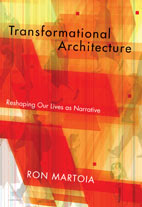
I received "The Bible as Improv; Seeing and Living the Script in New Ways", by Ron Martoia from Zondervan to review. I had high expectations after reading Martoia's last book Transformational Architecture. Not to long after beginning the book, I knew I was on to something special.

What Martoia does so well here is that he identifies the "itch". He sheds light on some of the ways that we have tried to engage the Bible, while also illuminating new ways to apply it. Martoia appreciates the grand narrative of God and his creation. He points to the problematic attempts to pull truths out of context only to really mess things up when we try to apply it to our lives. He reminds us that the Bible is a collection of a specific people within a specific history trying to make sense of what it means to be children of God. For us to neglect this when we read the Bible is tragic.

Luckily, Ron Martoia also points us in the direction for authentic engagement with the Bible. If the Bible points us to God's sweeping narrative, then Martoia proposes that we need to immerse ourselves with in "script-ure" and improv with in our own context what it means to follow Christ. Martoia makes some fantastic metaphors using the idea of musical and theatre improv. In both situations you must attempt to stay true to the structure of the musical piece or play, but still faithfully improv so that you are moving the song or story forward.

If you find yourselves with an "itch" when you engage the Bible, I would highly recommend this book. I have truly found hope within the possibility of faithful improv of "script-ure" within my community and in my context. My hope is that many more will read this book, embrace this new hope. "The Bible as Improv" is truly an itch worth scratching.

- Dan Jones

Wednesday, October 28, 2009

Drops Like Stars; Review of Rob Bell's New Book


I received my copy of Drops Like Stars by Rob Bell recently and I have finally had some time to sit down and read it all the way through. The thing about this book is that you find yourself tempted just to thumb through it, in part because of the artistic layout in the way of a coffee table book. (Perhaps this can be my excuse in not reading it thoroughly the first time around even though I have had ample opportunity to do so.) My thoughts on this book are three-fold;

1) Layout - Rob Bell deserves props for the courage to author this sort of book. If you have read Bell's previous books Velvet Elvis or even Jesus Wants to Save Christians; A Manifesto for the Church in Exile, this is a departure of sorts from these types of books. The book itself is physically imposing (shaped like a high school year book) and it includes stunning photography. Some pages have minimal wording on them. The layout is in the way of Rob Bell's video series Nooma. If you were to translate a Nooma video into words and pictures, I believe this is what it would look like. The most important aspect of the layout is that it works!


2) Dialogue - Books that move from being just a monologue by the author into being a dialogue proves to be difficult to find. However, Drops Like Stars proves to accomplish dialogue in ways that I never felt that a book could accomplish. This is the case in part because of the unique layout, and in part because of the personal stories that Bell weaves in throughout the book. With the photography and personal stories married together throughout, the reading of Drops Like Stars proves to be a very interactive experience.


3) Substance - With what seemingly appears to be little said in Drop Like Stars because of the fact that there are many pictures and less words written, "Stars" may surprise because it is very deep in substance. Bell explores the relationship of suffering with creativity. The question that Bell explores is not "why we suffer?", rather the question he asks is "what now?". Rob Bell writes in a way that allows the reader to listen, to talk back, and to explore. I believe that this style leads to a deeper learning experience.

In many ways this book invites further exploration and further questions. Pat answers will not be found, and the ending does not provide any resolve with any modernistic satisfaction. If you are looking for a typical book experience, this may not be the type of reading for you. However, if you want to interact with something that invites a deeper learning experience this may be something to look at, if for no other reason that it does look very nice on a coffee table.

-Dan Jones

Tuesday, September 8, 2009

Book Review; Fearless by Max Lucado

As I was reading some of the 'Praises' for Fearless by Max Lucado, I noticed that Donald Miller provided some positive thoughts about Lucado's latest book. I decided that I would give it a try even though I wasn't overly impressed Lucado's work on For The Tough Times.


The nature and tone of this book seems very appropriate in today's culture which is largely driven by fear. I found myself nodding along as I progressed through the book, while at the same time not blown away. Something that Lucado does successfully is that you can't help but feel truly comforted as you embrace the words of Lucado as he speaks about our biggest fears including death, violence, parenting, and enduring just to name a few. Unfortunately, much like other books by Lucado you also are not covering much new ground with this book either. With that being said, I do believe the book succeeds in what it is trying to accomplish. Lucado doesn't offer pat answers and black and white clarity. What he does provide however are appropriate reflections on various passages that truly comforts. Fearless is worth a read with appropriate expectations of what it is and what it is not.


Dan Jones

Tuesday, July 14, 2009

"The Sacredness of Questioning Everything" Serves As An Invite to Another World


David Dark, author of "The Sacredness of Questioning Everything", extends an invitation, in a string of essays, to join him in a different sort of world. This world has its own language and tone that David Dark artfully introduces line by line. Dark coins a language that consists of distinct descriptive nouns such as "uncle Ben", "nobodaddy", "plain speak", "HERstory" and "sacred cows", just to name a few. There is not so much as an explanation to this language, but an expectation to join in. At first, I found myself asking questions on what this new language was speaking of. (Perhaps this is to be the intention; hence the title?) However, as I progressed through the pages, I found myself caught in the moment much like a movie where you begin in a new world, but by the end you feel like you belong in that world. ("Chronicles of Narnia" and "Lord of the Rings")

This new world and language points and directs to a new culture of exactly what the title implies. Dark argues that there is very much a "sacredness", something to be had, in the culture or art of "questioning everything". Dark certainly lives in this world and this becomes apparent in this book. Using a wide range of sources to exemplify and embody this new culture, Dark himself recognizes that "questioning" reflects how we see ourselves in relation to God and those around us. The book is broken into chapters, each chapter introducing a facet of life that deserves a discipline of questioning. These facets include everything from God, History, the future, and even our offendedness. With such compelling facets, it is only fair that Dark chose to use a pop sensibility to showcase what this may look like through the likes of U2, Arcade Fire to "the Office". It may seem that the use of such vehicles to illustrate a direction or point would be an attempt to "dumb down" something that is difficult to understand. There is no such attempt here. The ability of Dark to provide social commentary to further illustrate his direction is impressive.

These facets are further explored at the conclusion of each chapter through a set of....you guessed it, questions. I find this to be a completely appropriate way to conclude each facet, and also to encourage a dialogue to further explore the direction Dark takes with each chapter.

After reading the book, I found myself eager to begin to live in this world that Dark invites us into. I can see how the "sacredness of questioning" can lead to a proper posture in relation to God and others around us. The question I continue to ask myself is if I have the humility to embrace this culture of uncertainty? Perhaps this is an appropriate response to the reading of the "The Sacredness of Questioning Everything".

-Dan Jones

Saturday, June 27, 2009

The Hole In Our Gospel; Inspirational and Challenging

Has the Gospel been limited by the way we present it? Is there more to the "the good news" then just a mere transaction? Is this life all about the life after or are we missing something? According to Richard Sterns, president of World Vision, there is much more. Richard Sterns sets to challenge and inspire readers in "The Hole In Our Gospel", by sharing his personal story in becoming the president of World Vision, and challenging the readers to join in the work of God in a world in need of a Gospel without a hole.

Richard Stern crafts a personal narrative that proves to be inspiring. As he walks through his personal road as a follower of Christ, you come away feeling that you have met Richard over coffee. His presentation of his story is a highlight in this book. As Richard Sterns is climbing the corporate latter, he finds himself interviewing for a presidential position at Wold Vision. With a spirit of reluctance, Richard Sterns decides to accept the position in World Vision and his life has never been the same.

Sterns also challenges his readers to get involved. As he presents some of the largest "life" issues in the world today, he carefully reminds his readers that there is a hope, and we can be involved in sharing that hope. Sterns shares some success stories to remind us that success is possible. At the same time there needs to be more done. Ultimately, Richard Sterns reminds us to not limit "gospel" to the afterlife. He reminds us that we have a message of hope for the right now. We do have the ability to share the Gospel without a hole in it. The question is are we willing to do this. If we are this book is a good starting point in this important conversation.
You can find Thomas Nelson's page for this item here.

-dj

Sunday, May 31, 2009

Thoughts on "Transformational Architecture" by Ron Martoia; Conclusion


This is my attempt in concluding the series of posts on my thoughts of Ron Martoia's book Transformational Architecture. I am going to be hitting the remaining book (which is a lot of book to cover) in 4 very high level points. I will purposely leave out some of meat in the remaining, not because it is unimportant to the book and its direction.

1. Little Gods

This chapter presents the idea that God has entrusted us to carry out his image to the world around us. In essence, he wants our flesh , our actions , and our words to represent God to a world that is looking for him. An interaction between Martoia and a student of his brings a nice summary of what this chapter entails;
"If we are little gods, so to speak---if we are the ones called to carry the look and feel and flavor of God in this world----then that’s a pretty cool place for the story to begin. That means the point of the whole story is quite different. Now it isn't about fixing something that’s screwed up; it's about fulfilling God's original reason for creating us and the world in the first place." (Page 108)
This is truly a different take on our purpose. But I do believe that Martoia is getting to something here. This is a message that I believe people are willing to align with. Instead of just sharing a proposition with someone, you invite them to be an ambassador for God and his presence to all those around us.

2. The Infectious Judger Gene

This is an interesting chapter on how sin creeps into God's story and how we play a role in it. Martoia connects the Genesis narrative to our tendency to carry judgment to those around us.

"Enter Mr. Serpent into the story. Adam and Eve decided the temptation to become like God was too great. In eating the fruit from this tree, they would have the ability to know good from evil---and they just couldn't stop themselves....Were they tempted by eating from the forbidden tree so that in addition to naming and separating they would also have the ability to know whether something was good or evil? It appears from the text that they would acquire the ability to make pronouncements, that only God... would be able to make." (Page 122-123)
Again, Martoia presents something that I have never really thought before. It does seem that we can trace our tendency to judge back to the garden. Is God the only one that decides on who is “in” and who is “out”? Martoia's presentation on this is convincing, and it does make sense to me. It’s something to be chewed on, that is for sure.

3. Yearning for Wholeness

Martoia explains that within all of us, we have inner cravings for connection. Specifically we have a desire to believe, to belong, and to become. Martoia explains that you will find these inner desires in all humanity.

In my experience these 3 desires seem to be true. Everyone wants to believe in something bigger then themselves, belong in relationships with those around them, and to have a hope for the becoming of something better for tomorrow. I think that Martoa wants us to be able to see these 3 desires in people. Allow those three desires to shape conversations and guide them in God's narrative.

4. Spiritual Cartography

This chapter presents the concept of that (in part) our job as followers, is to function as a sign for others to follow as we reconnect with our story that God has graciously invited us to be a part of.
"We need a spiritual cartography for the conversations we are in engaging in. We need to be incremental and directional, as we engage people in the story of their lives and its intersection with God's big story." (Page 205)
This can be tough! Church has told me for years that there are steps to "conversion". This goes far beyond steps. Martoia is presenting a process, as someone aligns there lives with God's desire for them. This is less of a "click of a switch" and more of a "road trip". This is very important to understand as we invite people to hear the story. It will take time. Our patience will be necessary. Our relationships with that person need not to be the victim if no clear indications of "conversion" is seen.

My hope for this review is that you will pick this book up and give it a chance. This has personally shaped the way I have interacted with those around me. This brought a new appreciation for the journeys that people are on, and where they are going. Martoia has really shaped conversations that need to be shared. So if you have the chance, and you are willing to rethink, pick this book up and really challenge yourself.

-dj

Saturday, May 16, 2009

Thoughts on "Transformational Architecture" by Ron Martoia; "Imago Dei"

As I have written before, this book by Ron Martoia sets to explain how we can share our faith in this new postmodern context that we fund ourselves in. One of the "texts" that we mentioned earlier was the "biblical text". Martoia explains that we often share God's story starting at the fall of man in Genesis. However, Martoia argues that we need to start at the creation, or at the beginning of the story. And if we do not do this, we will miss something crucial.

" As we learn about seeing our lives in narrative, it may be an obvious observation that God made us this way and that he made us unique and special in comparison to all other created things. We are made in imago dei. This truth, as it grips a human spirit, has the power to transform. We may conclude that from the very beginning we have been made to be a part of a grand story, to gravitate toward compelling stories, and to be mesmerized by great story telling." (Page 92)
Martoia wants us to start to go back to the beginning of the beginning. And on a nice little side note, Martoia explains that he believes that the author of Genesis did not provide this account in order for us to explain all the questions concerning dinosaurs, age of earth, and evolution. This is crucial because many of our teaching on Genesis gets to far wrapped up in this sort of thinking, and this may not allow us to see how the story truly begins. Now that being said, how should we treat the creation text, and how should we put that into context within the grand narrative? Martoia rightly points out that God is not only creating, he is also separating.

"We must not miss something that is often overlooked: God has the ability through his speaking to do this separating work, and it is called good. God's wholeness, his completeness, his integrity, in the truest sense of the word, isn't jeopardized as he splits things into groups. As he judges one thing from another and puts one thing in once category and another thing in another category, it is all good, according to the author." (Page 94)
The fact that God is able to judge something as being "good" means that it may have been possible for God to judge creation as being bad or evil, and Martoia rightly emphasizes this very point. Martoia then moves to show us one of the key pieces in the creation account;

"Something unique happens in this part of the story. God marks man and woman as different from all over the other living creatures... Man and woman are made imago dei, in the image of God, and they are giving the authority to rule over the rest of creation." (Page 95)
Martoia suggests this very point in the story is where we should start when sharing this story with others. Instead of presenting the typical propositional narrative, we present this story, created humans having the "image of God". But what exactly is Martoia suggesting when he says that this is the starting point? And what does it mean exactly to be created in God's image?
"But most compelling to the biblical and cultural context is the fact that Adam and Eve were given the opportunity to benevolently and creatively serve/ rule the world, the birds, in the sky, and the fish in the sea.... Is it possible that this transfer of royal rule is, at least in Part, what it means to be made in the image of God?" (Page 96)
Martoia suggests that this could be the inner transformational architecture that humanity has within us. Our job, in part, would be as followers of Jesus, to point and guide others to listen to this transformational architecture. Where would Jesus fit into this new frame of God's story? Perhaps Jesus came to show us in its perfection, what this would look like in humanity.

Something interesting to note, Martoia suggests that this concept maybe important to understand idolatry. God wants us to be co-creators, partners with him, as we represent him to his creation. The problem with idolatry is that we choose something that is physical for God's representation, rather then allowing this "image" that is stamped on humanity, to represent His presence on this earth. Idolatry by nature is going against what God has designed for us.

This framing opens up responsibility to humanity to carry out the work of God and to allow God's Spirit to beam His presence to everyone we encounter on a daily basis. This is why Jesus is so important and essential. He is the very nature of God, and his the very nature of humanity that is stamped with this "Transformational Architecture". Without Jesus, we would have no clear direction or hope. He has shown as a new kind of humanity that has allowed us to plug into what it really means to live as God has intended us to live. If I were to recommend only one chapter to read from this book, it would be this one. Martoia does a nice job of framing this story as I believe it was intended to be framed. Martoia's presentation of this has given me fresh ideas on what it means to follow Christ, and share that with others.

I will be concluding the book review with one more post. I will be hitting the remaining book on a very high level, not because I feel its not important, but I feel that I will conclude the very essence of what it so very important in this book, while not recreating the full text myself. (This porbaly good news to readers out there.)

-dj

Saturday, April 18, 2009

Thoughts on "Transformational Architecture" by Ron Martoia; "The Human Text"

This will be a presentation of Ron Martoia's "human text" that he uses as apart of his "three texts". Again, the premise of these "three texts" is that we must understand these three texts, and grapple with each, in order to effectively share God with those around us. Before Martoia fully unloads this "human text", Martoia effectively summarizes the previous texts as he ties in the human text by sharing this,

"The biblical text has to be intelligible in the cultural context in which we are called to do ministry. It is in the context that the human text or story is shaped. The text we live in and the shape of our story are functions of our personal experiences and the contexts into which we were born." ( Page 75)
Martoia further argues that since there has been no compelling story that religious communities have found, that the west has embraced another story. This story is "the American dream". I cannot agree more that this is indeed is an overarching narrative in which the west has fully embraced. This "American Dream" drives many stories in our everyday life including religion, politics, and even our personal motivations. This is not to say that "the American dream" is not in itself completely wrong. I think what Martoia is trying to say is that ultimately what we do as individuals and communities should embrace the larger of story of God. And within that story, we will find that there are niches within it, which coincide with "the American dream" narrative. However, the parts of God's story that are much different (and there are major differences) we will need to recognize, and differentiate ourselves.

Martoia builds his argument that "the American dream" really does find itself in our every day lives, and it mainly goes unnoticed. Everything from marketing, schools from a young age, and personal relationships, Martoia argues that these can be, and will be infected by "the American dream". As Martoia presents the case for this, I find myself resonating with much that he says. Much what I do daily, is in some way, related to my desire to move up the corporate latter. I wake up when I do, to be on time to work, and to impress the higher ups. These are all small ways in which this "American Dream" shows up within my life. Has this “American dream" found itself within our churches? This is a question in which Martoia explores as he recalls a personal experience with "the American dream" within his own ministry.

"I was slowly being enculturated in the 'American Dream: Church Edition.' With big numbers, great creativity, ample budgets, and 'coolest buildings' status comes bigger ego, bigger ego, and --- yeah ---bigger ego." (Page 79)
I must admit, in my limited experience in professional ministry, it is very easy to be caught up within the midst of our own egos and others as well. The "mega church" syndrome drives smaller churches into an "American Dream" hysteria as they try to adopt plans to become the next biggest thing. Why is this "American Dream" important to understand? I am glad this question is addressed in this book, because Martioa is convincing in the answer to this question.

"We need to hear the story of the American Dream so we can get in touch with how its lure worked on us and then how we can apply our insights to the arena conversations." (Page 82)
With Martoia, as he presents these "texts' and including this one, it all comes back to our personal conversations within our everyday relationships. It would be silly not to recognize that this "human text" does not influence the larger western narrative, which includes us. This is a missional mindset that Martoia is presenting. Missionaries spend times in preparation as they embrace the culture they will be working in. They learn languages and customs. And as our world in the west is shifting into a postmodern context in midst of this "American Dream'", would it be safe to say that an adequate recognition of this is important as we share Gods' story with others? I would like to end with with Martoia's conclusion with American Dream. I believe this to summarize the folly in chasing this American Dream.

"Instead of the American Dream realized, it will be the American Dream frustrated. And in our fragmented and episodic life experiences, the idea of a continuity that brings some measure of order to our narrative is a relic of yesterday." (Page 86)
As we engage in today's culture with "the human text", let us realize what we are working with in this "American Dream" as well. And if Martoia is right (And I think he is) then will be living within a very frustrated culture and this "American Dream" will never be fully realized. This will be important to consider when evaluating our full engagement with the world, as we try to plug people into "God's Dream" instead of the folly of the "American Dream."

-dj

http://audaciousliturgy.blogspot.com/

Tuesday, April 7, 2009

Thoughts on "Transformational Architecture" by Ron Martoia; "The Biblical Text"

In an effort to continue my review of "Transformational Architecture" by Ron Martoia, I wanted to present the next portion of my thoughts on Martoia's second text titled "the Biblical Text". This is one of the most fascinating parts of the book. Martoia basically says that in order to effectively share God with others it is important to examine the Biblical narrative that we reference.

Martoia explains that Christians have always presented at least a portion of the "Biblical Text".

"Most Christians...know an abbreviated CliffNotes version of the biblical story. It is important to realize this, because it is precisely a miscue at the story level that causes a nearly complete failure at the spiritual conversation level." (Page 51)
Is it possible that Christians have been telling just a portion of whats important in God's story? Are we willing to question this at all? At the core of this question is an evaluation of our humility. If there is any possibility that we have might of gotten it wrong, is it possible that we can become to prideful to move in another direction? I think this is a question that Martoia forces us to ask ourselves.

There are two directions you can go with this question. The first is to embrace the possibility to see if we are in any need of repentance. The second is to embrace a prideful mindset, and go into this with no willingness to engage in any form of doubt. The second possibility is a mistake, and I truly believe truth will not change in the environment of doubt. With this being said the traditional story as Martoia explains goes something like this;

"'...you are broken, messed up, heading to hell---and you need to fix it.' The story continues: Jesus has come and lived a perfect life, so that when he died, he could die the death you should have died. If you will trust him and his death, you can now live the life he lives and someday have a seat forever with him in eternity."- (Page 51)
This message sounds awfully familiar to me in my tradition, as it probably does in many traditional evangelical circles. So to question the message can be a tough one to embrace. At the same time, I wonder if we have missed something as Martoia suggests. Are we using the watered down gospel? If this isn't the full story then what is it? Martoia does explain this, but not in totality within this chapter, Martoia does offer this though,

"Here is the rub: Did Jesus go around offering the propositional distillation...?Was this what constituted following him? Jesus, it seems, had a fundamentally different mission. He wanted to broker shalom. Jesus was interested in imparting wholeness to people, and while eternity in fellowship with him is in fact a part of that wholeness, it wasn't a primary part of the conversation he had with people" (Page 55)

This is a message that I can follow, and not just believe. And that is exactly what the problem is in just telling part of the story. It becomes tempting to limit faith just to belief. But, the Jesus message invites us into mission and movement. It is a call to partner with God and His desires for an abundant life for all. Is it possible that when we offer the CliffNotes version of the story we miss this central theme. I think it is very possible and Martoia is right in pointing this out.

Martoia uses Luke 4:16-21 to point to a possible "mission statement" of Jesus. If you read the passage, does it at all resemble our mission within most churches? Martoia rightly points out that we will "spiritualize" portions of this text to make it fit with our belief. Does the text allow this freedom? It is is a tough argument to say 'That's not what Jesus meant...he really meant this...'.

Martoia ends with thoughts on our modern approach to scriptures. He says this about that approach,

"We have been co-opted by the same game rules of the modern world and we have reduced the Bible to a set of propositional principals to apply. We even call it 'owners manual for life'." (Page 61)

This happens too often in church circles. If we string enough random verses to prove a point, we then win people to Christ. At least that is what we tell ourselves. I think that we intimidate others in our attempts to throw verses at others. I have known others in which this proved to be more harm then good. What is the alternative though? Is there a better way?

"When we understand the entire story, starting with creation rather then the fall, we start with God's intended purposes for the world. When we start with creation, we start with the very reason we exist and the basis of our yearnings. When we understand creation, we have a clear picture of what the whole world is headed back toward as all things are ultimately restored in Jesus. " (Page 66)

The central concept that Martoia is saying that we should embrace is the narrative. To see the biblical text as it was intended, and that is an ongoing story, as Martoia calls it "meta-narrative". In order to do that, we should not start off with the "sin problem" as we often do. Instead we must look at the beginning of our story in creation. This is where we will find our purpose within the story. Martoia will pick this up further in the book.

It is a challenge to ask ourselves if we are sharing the full message of God. I personally do believe that Martoia is on to something when he suggests that we are leaving out very important aspects of the story. I believe that embracing the message as a narrative we have room for a true sharing experience with our friends. By embracing narrative, we can plug ourselves in this ongoing story that is still being written. I would rather invite someone in this ongoing story, and invite them to participate in this partnership with God, rather then convincing them to believe a set of propositional truths. The only question becomes, is this a narrative that the church can embrace?

-dj

http://audaciousliturgy.blogspot.com/

Sunday, March 29, 2009

Thoughts on "Transformational Architecture" by Ron Martoia; "The Context"


A key component in sharing Jesus with our new postmodern world is to understand what Ron Martoia explains as being "the three texts". In this particular post I will be summarizing the first text that Martoia presents, and I will offer some thoughts on this text as well. The first texts that Martoia explains as being a part of any conversations is "the context".

"The Context"
Martoia explains "the context" in this way, "...is everything from geography to culture....This text is important to understand because it provides the 'container' in which everything in life transpires." (Page 19)

This is where you first meet "Chad". Chad will be introduced in this chapter and will be followed up on through out the remaining of the book. Chad is presented as one that has spiritual questions and thoughts, and Ron Martoia is his partner in crime. Throughout the book they have very lively and intriguing discussions. This conversational tone is used as the vehicle to present "the context". Chad brings up something called the "axial age" The "axial age" is explained like this;

"The axial age was the time period between 800 and 200 BC when some key religious figures and movements were born in China, India, the Middle East, and certain places in the west--movements that still nourish many of the spiritual traditions of our day." (Page 22)

This axial age is talked about extensively between Ron Martoia and "Chad". One of the ideas that emerges from this conversation is the idea that we might be in the middle of another axial age today. A driven point that leads to this new axial age is the idea that the original axial age emerged as a deeper connection to humanity outside of violence, and this next axial age emerges from globalization.


This axial age brings some good points, and it can be fairly though provoking. However, if we just focus on this axial age that is discussed, I believe that we will miss the point of this whole discussion. What I believe Martoia is saying is that we need to listen to our spiritual friends. "Chad" is the one presenting such discussions and Ron allows "Chad" to steer the discussion while Ron is attempting to actively listen.


"My guess is that the world has lots of Chads. Lots of people are trying to figure out if Christianity can handle their toughest questions, their random musings, and their deepest doubts. "

Herein lies "the context" in which Martoia argues that we as followers of Jesus need to not only be aware of, but we need to to be empathetic to as well. As Chad references popular spiritual books, musicians that talk about Jesus, and other outlets that our expressing various thoughts on spirituality, Martoia used these expressions as a launching pad for an engagement of conversation where he tried to express himself as an active listener.

To sum up Martoia's work in this chapter, we need to realize "the context" as a a very important consideration when talking to friends about spiritual items. "The context" is where human history has been, where is is now, and where it is going. Whether that being the context of globalization, war, or a new "axis", and understanding of our movement as a humanity is crucial.

Now, here is my admission. I promised to do this in a 3 post outline. I don't think this will happen, I will spend two more posts on the remainder of the texts, then hopefully two more posts from there. I would rather cover all the areas in which I believe to be important so I can do my due diligence.

-dj

http://audaciousliturgy.blogspot.com/


Saturday, March 14, 2009

Thoughts on "Transformational Architecture" by Ron Martoia; Introduction

As I set down to gather my thoughts to review of "Transformational Architecture" by Ron Martoia, I began to realize that this was going to be more of a process then any book that I have offered my thoughts on previously. Why? The material here is too thought provoking and, to use a word offered in the title, too transformational. A couple paragraphs just would not be suffice, and I feel that it would not provide a true picture of how I feel about Martoia's work here. Let there be no misunderstanding, this is one of the more important books that I have read in quite some time. So what I want to do, is break the book up in its natural parts, and as I do this, I want to offer a few items.

The first item that I would like to provide is just a summarizing of the offering of each part by Martoia . I want to do this, because there is just so much in here, I find it would be most fair to allow the cream of the crop be present in my review. I also want the review to reflect the flow and the way Martoia presents his take on the essential narrative.

The second item that I would like to offer in my review is my thoughts and reflections of each part. I realize that my thoughts will play second fiddle to the incredible material that I plan on summarizing, but what is a review without the reviewers thoughts? I hope to add any insight or to just reaffirm items of importance.

The review in totality will be broken up in 3 additional posts from this one. The next post will reflect on Martoia's thoughts on the "3 Texts". The 2nd and 3rd posts will reflect the remainder of the book (which is not broken down like this by Martoia, however there is a lot of ground to cover so I will).

Let me end by proving the premise of "Transformational Architecture", as laid out by Ron Martoia in the "Introduction".

"If you are a follower of Jesus, if you take his motivational charge in Matthew 28 seriously, if you love him and what he has done with your life, then it is a natural overflow to want to share it with others. The question is How?" (Pg 11.)

Isn't this a question that we all have had, especially in our new postmodern context that we have found ourselves in? I personally resonate with a frustration when wanting to share this amazing Jesus. I have found that old methodology of handing out tracts and relaying apologetics have not worked either. So when Martoia asks this question, I found myself eager to see what Martoia purposes as a hope, in an effort that I make in sharing Jesus with others.

Martoia explains that not only our methodology needs to be examined but our message does to. This is the crux of the remaining of the book, and that is the message that we relay to others. But I am getting ahead, because there will be much more of this later. First, Martoia essentially sets out to explain the reasoning of the title of the book;

"... I find that people are genuinely interested in spiritual conversations. Why? God's original architecture plans for human 'heart space' is designed us with cravings, longings, yearnings, that sit at the intuitive level of our lives." (Pg 12.)

Do I agree with this? I think so. I find that some of my closest friends outside of any affirmative discipleship have the same spiritual cravings as I do. It only seems natural to allow this to be a starting point in spiritual conversations, and to some degree, I have experienced this. Martoia further explains his use of Architecture;

"....architecture emerges from a couple of different associations...(it)can be about buildings and design....But architecture can also be seen through the lens of software and computer design." (Pg 16)

Martoia further explains that computers have several levels of different communications with different operating systems. All of this communication is happening at the same time, so that the computer may fully operate to its fullest potential. He explains that "...this structure is referred to as the software's architecture."

Herein is the premise of what Martoia will be presenting, "We have been specifically built- architected- with core deign elements that cause us to crave transformation." (Pg. 17) Are we called to listen to this cravings? First we must decide if that there is this underling yearning, and if so, we must faithfully listen.

I think Martoia's presentation of his premise works, but it pales in comparison to the journey that he takes you on in the remainder of the book. That being said, its just the introduction, there is a reason why you keep reading further.

This, I hope you will do some time in the future. But in the mean time, stay tuned for the remainder of the review, the next portion will be coming in the near future. As I said before, I will be covering Martoia's presentation of the "3 Texts".

-dj

http://audaciousliturgy.blogspot.com/

Wednesday, February 4, 2009

Book Recommendation; "My Beautiful Idol" by Pete Gall


There is something about a memoir that I just love. I think the reason that I love a memoir so much is because of the fact that a memoir brings in a relational aspect to a reading. I feel that through a memoir the reader has the ability to engage with the author in such ways that the reader may finish feeling like they know the writer. With that said, I think there a couple ways you judge a memoir.

1) Does the author show vulnerability? In order to bridge a relationship with the reader, the author must find ways to become appealing and brutally honest.

2) Does the author bring a writing style that is engaging to the reader so that the reader may feel like they just shared an experience with the author. I believe this to be important because I feel that the memoir should be appealing in the way of a relational writing.

I give this background first because I feel that "My beautiful Idol" not only meets this criteria, but it exceeds it. Pete Gall writes with incredible vulnerability, at times the book becomes a confessional. This is not a confessional that makes the reader uncomfortable. It actually builds a bridge to the reader in common ground. I found myself many times thinking that I have always thought about the various topics that he presented, in a way that put words to my thoughts.

Pete Gall also has a very engaging writing style in the way of Donald Miller. A part of the style in which it was engaging is the content itself. I will address some gems here in a little bit. Gall presents the material in ways that really were unpredictable. I am not a big fan of writing in which I can guess the point behind a certain story before it even happens. Gall kept me guessing the whole time. The flow is very fast paced and thought provoking.

Here are a couple of gems I found:

1) The race track illustration for salvation was absolutely phenomenal. If you want a description of what Pete Gall said about this, refer to my previous post "unfinished Bono".

2) The presentation of Gall's various "Idols". I believe that this is a shared experience with many followers of Jesus.

3) The ongoing stories that follow Gall in his occupations and identities were delightful.

4) The struggle that ministers and leaders often have in the ministerial process. There is always a temptation to sell the Christian product so that the buyer feels they purchased good Christian points for God. Gall talks about this process extensively and struggles with it. I relate to this struggle.

After finally picking up this book to read, I could not hardly put it down. If you are a follower of Jesus and you like to listen to life stories and have a "shared experience" with a memoir style writing, I would encourage you to pick this one up.

You can find Zondervan's page for "My Beautiful Idol" here.

-dj

http://audaciousliturgy.blogspot.com/

Sunday, January 4, 2009

Book Review; Jesus Wants to Save Christians


First, I must say that I have very much enjoyed Rob Bell's past work with the Nooma series, and his two books that he has authored, Velvet Elvis and Sex God. I feel that Rob Bell is a fresh thinker and wants to dig deeper into preconceived notions that we often approach scripture with. Bell's latest offering is no different. Jesus Wants to Save Christians, A Manifesto for the Church in Exile challenges Jesus' followers to approach salvation humbly. To often we get caught up in reaching the world for Christ, when God's church can use some salvation as well.

Bell lays out an argument that the church is blessed to become a blessing, and that somewhere down the line, we have missed the mark. Our call to become a blessing has been lost in church programs, buildings, slick marketing, and politics for power.

Retracing the roots of the Christian narrative, Bell suggests that God has "heard the cry" of the oppressed. Since the beginning, God's purpose for His people is to be a blessed people so that they can be a "blessing" to the world, sharing in God's dream for this world. Bell moves through the narrative starting with Cain and Abel, moving to the Exodus and Sinai. Bell argues that the cry of the oppressed moved God.

When the oppressed becomes the oppressors under the "wisdom" and reign of Solomon, God moved to action.

To bring about a new kind of Kingdom, a true faithful marriage between the divine and humanity, Jesus is the promise for a better world through His death, burial, and resurrection. His followers have the opportunity to live out this blessing to the World.

However, more times then not, the church mission is lost in midst of many distractions. Bell reminds us of our purpose. He reminds us to move past the distractions. He reminds us that Jesus wants to save us from anything that can hinder His work in this world.

Rob Bell is not the first to point out this. You can finds similar work with Shane Claiborne and N.T. Wright. Bell does, however make this subject very accessible. Contrary to others, I am also a big fan of the format of Bell's books including this one. Jesus Wants to Save Christians is a short read, which is not a bad thing at all. I would recommend this to those that are looking at their Christian faith and wondering if there is more. I believe you will find more in this tangible calling to be a blessing to the world.

-dj

http://audaciousliturgy.blogspot.com/